 RANGE & FIELD HEALTH
You know the moment.
Last string of the day. You pull the muffs down around your neck, and the range finally goes quiet.
Except it doesn't. There's a thin, high whine sitting right behind your eyes. You tell yourself it'll fade by the time you get home.
For a lot of men who grew up shooting, it stopped fading years ago. It rides along on the drive home. It's there while the TV is on. And it's loudest at 3 a.m., when the house is dead quiet and nothing covers it up.
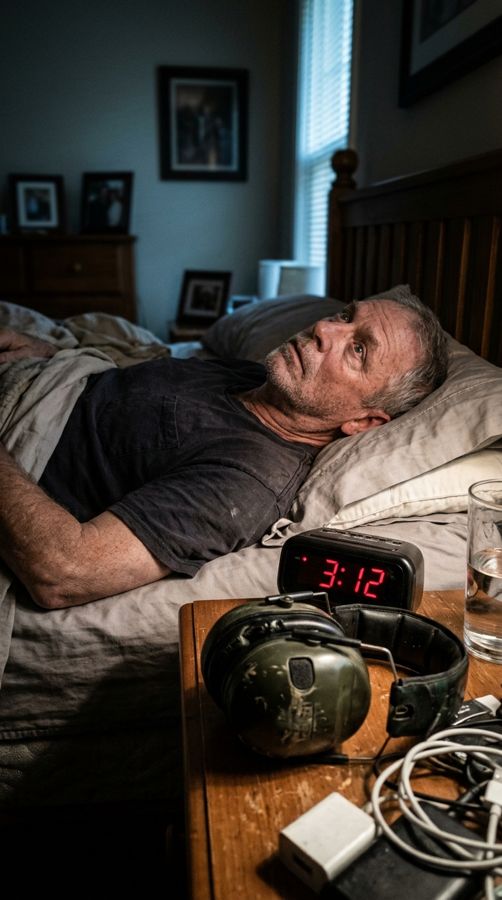
If that sounds familiar, you're in big company. The U.S. Fish and Wildlife Service counts about 47 million Americans who shoot at targets, and in one university survey of 300 shooters, about half said they'd had ringing in their ears at least once in the past year.
Why a gunshot is different from every other loud thing
Hearing experts start worrying around 85 decibels, roughly a lawn mower, over hours. A single gunshot is in another league: about 140 to 175 decibels, depending on the firearm and load. Indoors, or next to a muzzle brake, it's worse.
At that level, damage isn't slow. Inside your inner ear are thousands of tiny hair cells that turn sound into signals. A blast can bend or break them in a fraction of a second, and they don't grow back. When enough of them go quiet, the brain often “turns up the volume” on its own. That's the ringing. Doctors call it tinnitus.
High, quiet sounds fade first: birds, leaves, a whisper across the truck. That's why so many hunters notice it in the woods before anywhere else.
The three habits that cost shooters the most
“I need to hear the woods.” In that same survey, more than 80% of hunters said they wear no hearing protection while hunting. One shot a season doesn't feel like much. Thirty seasons is thirty blasts at point-blank range.
“Muffs are enough.” With rifles, magnums, and braked muzzles, one layer often isn't. Ranges and audiologists recommend plugs under muffs.
“It'll go away.” Ringing that lasts more than a day after shooting is a warning sign. The next exposure adds to it.
Your hearing kit, starting this season
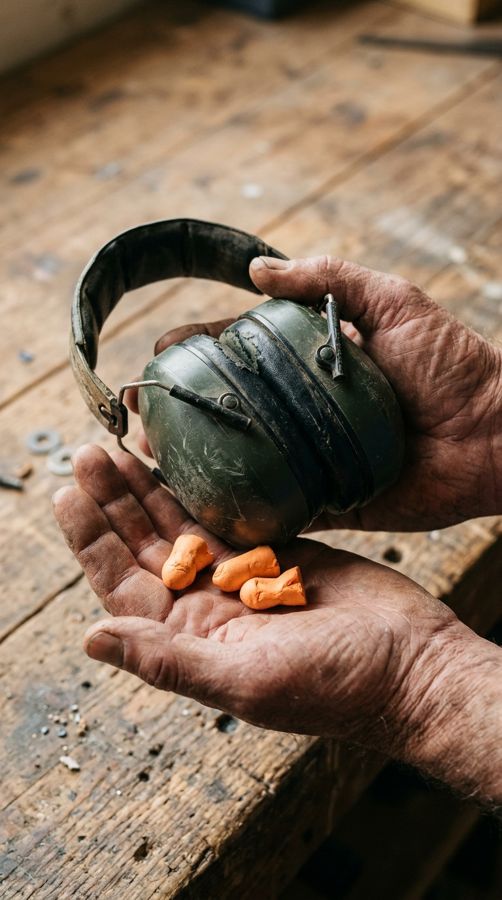
1. Double up. Foam plugs under muffs every time, indoors and out.
2. In the field, go electronic. Electronic earbuds or muffs made for hunters amplify normal sounds and clamp down on the blast. You hear the deer and keep your ears.
3. Get a baseline hearing test. An audiologist can show you where you stand and rule out simple causes like earwax, blood pressure, or medication side effects. Many offer free screenings.
4. Give the 3 a.m. silence something to do. A fan or white-noise app gives the brain something besides the ringing to listen to.
5. Support your ears from the inside. This is the newest item in a lot of shooters' kits, and the one people ask us about most. More on it below.
The item some shooters add: a daily ear-support supplement
Let's be straight. Ear pro protects you from the outside. Nothing regrows damaged hair cells, and anyone promising a cure is selling you something.
What some men add, alongside protection and a doctor's advice, is a daily supplement with nutrients and herbs that support circulation, nerves, and sleep. One we looked at is Zeneara, a capsule sold online. According to the company, each serving contains:
| Ingredient | Why it's commonly used |
|---|---|
| Ginkgo biloba | Long used for circulation; tinnitus studies show mixed results |
| Zinc and vitamin B6 | Nutrients involved in nerve and inner-ear function |
| Taurine | Amino acid studied for nerve health |
| Probiotic blend | Gut-health strains the company links to overall inflammation |
| Passionflower and valerian | Traditional calming herbs, often used for sleep |
Does a supplement actually help?
Honest answer: the science is mixed. Some studies on ingredients like ginkgo and zinc show small benefits for some people; others show none. Some men tell us they notice a difference, and others don't. That's exactly why the guarantee below matters more than any promise.
Why the guarantee is the real selling point
The company advertises a 365-day money-back guarantee. That's a full season, opening day to opening day, to see if it's worth keeping in your kit. If it isn't, the company says you can send it back for a refund.
Prices on the official page start at $59 for one bottle and drop to about $39 a bottle on the 6-bottle package, with free shipping on larger packages.
Good to know: there's no published clinical trial on Zeneara itself, results vary, and ginkgo can interact with blood thinners. If you take medication, ask your doctor first.
Check Zeneara's official page and today's price →
365-day money-back guarantee, per the company
Quick answers
Is the ringing permanent? Sometimes it fades, sometimes it doesn't. Ringing that lasts more than a few days after shooting deserves a hearing test.
I still hear fine. Should I care? Yes. Noise damage doesn't hurt and gives no warning. If you've been shooting since you were a kid, your ears may already have 20+ years of exposure. Protecting them now matters more than at 60.
Does a supplement replace ear pro? No. Nothing replaces plugs and muffs. A supplement is, at most, one more item in the kit.
Check Zeneara's official page and today's price →
365-day money-back guarantee, per the company